Finding love online has become increasingly common in our digital age. Millions of people use dating apps, social media, and online platforms to connect with potential partners. But this shift to digital romance has created opportunities for criminals who exploit people’s desire for connection and companionship. Romance scams have become one of the fastest-growing online crimes, combining emotional manipulation with financial exploitation in devastating ways.
If you’ve met someone online who seems too good to be true, declares love unusually quickly, or has asked you for money, this guide will help you understand whether you’re being targeted. We’ll explore how these scams work, warning signs to watch for, and what steps to take if you’ve been victimized.
What Are Romance Scams and How Do They Work?
Romance scams occur when someone creates a fake online identity to build a romantic relationship with you, with the ultimate goal of stealing your money. These online romance scams occur across dating websites, social media platforms such as Facebook and Instagram, messaging apps, and even professional networking sites.
Unlike quick hit-and-run frauds, romance scammers invest significant time—sometimes weeks or months—building emotional connections before requesting money. They’re patient, skilled manipulators who study your profile, learn your vulnerabilities, and craft stories designed specifically to appeal to your emotions and circumstances.
Here’s how the typical scam unfolds:
Stage 1: The Perfect Profile: Scammers create attractive fake dating profiles using stolen photos of real people—often models, military personnel, or professionals. They craft backstories as doctors working abroad, military members stationed overseas, engineers on international projects, or recently widowed individuals seeking new love.
Stage 2: Building Trust and Emotional Connection: Once they’ve made contact, scammers move quickly to establish emotional intimacy. They may message you constantly, share personal stories, express unusually intense feelings early on, and use language designed to make you feel special and understood. Common phrases include “You’re my soulmate,” “I’ve never felt this way before,” or “We’re meant to be together.”
Stage 3: The Crisis: After establishing trust, the scammer introduces a fabricated emergency. They might claim to be:
- Stuck in a foreign country without access to funds
- Facing a medical emergency requiring immediate payment
- I need money for travel documents or visa fees to visit you
- Dealing with a business crisis that threatens their livelihood
- Requiring customs fees to ship valuable gifts or inheritance
Stage 4: The Request for Money: They ask you to send money via wire transfer, gift cards, cryptocurrency, or other difficult-to-trace methods. They may promise to repay you quickly or frame it as a test of your commitment to the relationship.
Stage 5: Escalation or Disappearance: After you send money, scammers typically either ask for more (creating new emergencies) or disappear entirely, blocking you on all communication platforms.
The Psychology Behind Romance Scams: Why They Work
Understanding why romance fraud succeeds helps explain why intelligent, cautious people fall victim to these schemes.
Emotional Manipulation: Romance scammers are experts in emotional manipulation scams. They identify what you’re looking for—companionship, validation, excitement, security, and present themselves as the perfect answer. They mirror your interests, validate your feelings, and create a sense of deep connection that feels rare and special.
Isolation Tactics: Scammers often encourage you to keep the relationship private, move conversations off dating platforms to private messaging apps, and may subtly discourage you from discussing them with friends or family who might recognize red flags.
Investment and Commitment: The time and emotional energy you invest in the relationship create psychological pressure to believe it’s real. Admitting you’ve been scammed means acknowledging that the connection was fake—a painful realization that many victims resist even when evidence mounts.
Exploitation of Trust: These criminals exploit our fundamental human need for connection and our desire to help people we care about. They understand that love makes people vulnerable and willing to overlook inconsistencies they’d normally question.
10 Warning Signs of a Romance Scam
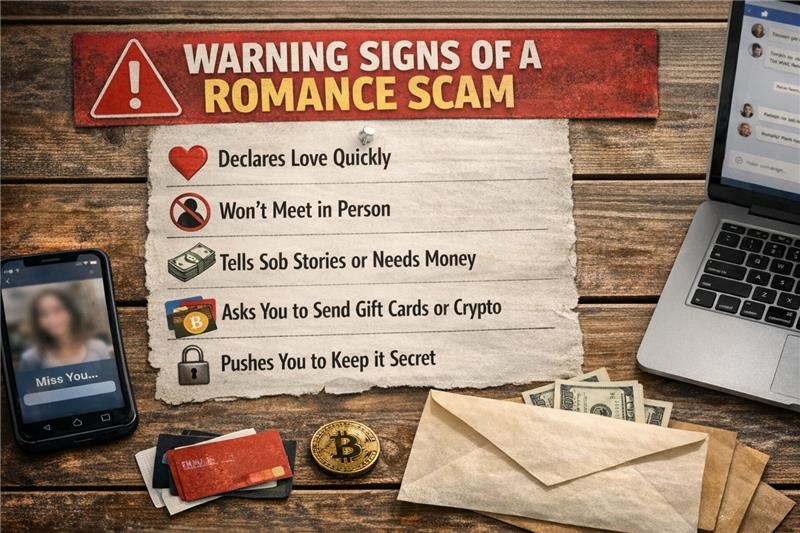
Recognizing romance scam warning signs early can protect you from financial and emotional devastation. Here are the key red flags:
1. Too Much, Too Fast
They declare love, use terms like “soulmate” or “destiny,” and want to deepen the relationship unusually quickly—often within days or weeks of first contact. Genuine relationships typically develop more gradually.
2. Avoiding Video Calls and In-Person Meetings
Romance scammers consistently refuse video calls or always have excuses why they can’t meet in person. Their camera is “broken,” they’re in locations with “poor internet,” or emergencies constantly prevent planned meetings. This avoidance allows them to maintain their fake identity.
3. Inconsistent Stories
Pay attention to details about their location, job, background, or daily activities. Scammers often slip up, providing contradictory information because they’re managing multiple fake identities simultaneously.
4. Claims of Working or Living Abroad
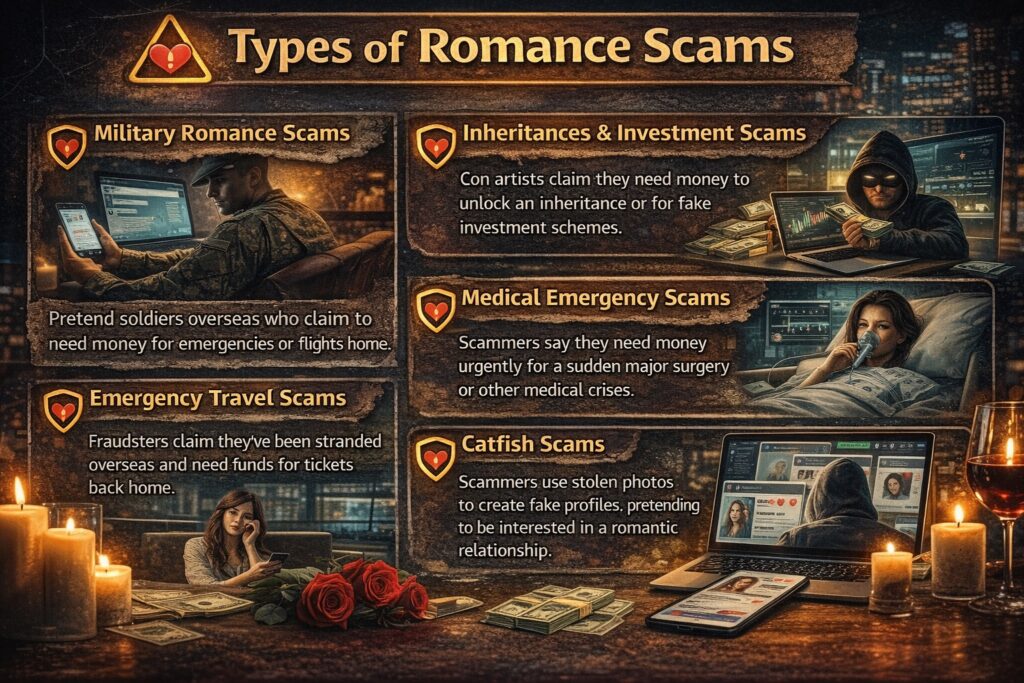
Military romance scams are particularly common, with scammers claiming to be deployed soldiers. They may also pose as oil rig workers, international doctors, or business professionals overseas—any role that explains why they can’t meet you and might need financial help.
5. Financial Requests
Any request for money is a major red flag, regardless of the reason given. Legitimate romantic partners don’t ask for financial help from people they’ve never met in person. Whether it’s emergency medical bills, travel costs, business troubles, or customs fees, these are scam tactics.
6. Requests for Gift Cards or Cryptocurrency
Scammers prefer untraceable payment methods like gift cards, wire transfers, or cryptocurrency. If someone asks you to send money via these methods, it’s almost certainly a scam.
7. Professional-Looking Photos That Seem Too Perfect
Romance scammer pictures are often stolen from models, actors, or other people’s social media accounts. If their photos look professionally shot or model-quality, reverse image search them to verify they’re not stolen.
8. Moving Off Dating Platforms Quickly
Scammers want to move conversations to private messaging apps, email, or text messages. This removes the communication from platform monitoring and makes it harder to report them.
9. Sob Stories and Drama
Their life seems filled with constant crises, tragedies, or dramatic situations requiring emotional support and eventually financial help. The drama is designed to keep you emotionally engaged and sympathetic.
10. Pressure and Urgency
They create artificial urgency around their requests, claiming time-sensitive emergencies that require immediate action. This pressure prevents you from thinking clearly or consulting others.
Common Types of Romance Scams
Fake Profile Romance Scam Techniques
Scammers carefully construct profiles that appeal to their target demographic. They research what photos and backstories work best, often testing different personas to see which generates the most responses.
Catfishing Scams
Catfishing scams involve creating entirely fake identities, sometimes using real people’s photos without their knowledge. Victims may later discover that the person in the photos is real but has nothing to do with the scammer.
Crypto Romance Scams
A newer variant, crypto romance scams involve convincing victims to invest in cryptocurrency platforms or opportunities. The scammer might introduce you to a “profitable trading platform” (which they control) or convince you to send cryptocurrency directly to them.
Pig Butchering Romance Scam
The pig butchering romance scam is particularly cruel—the name comes from the practice of “fattening up” victims before the slaughter. Scammers build long-term relationships over months, gradually introducing cryptocurrency investment opportunities. They show you fake profits to build confidence, encouraging increasingly large investments before stealing everything.
Inheritance Romance Scam
In inheritance romance scams, the fraudster claims to have received or be expecting a large inheritance but needs money for legal fees, taxes, or processing costs to access it. They promise to share the inheritance with you once it’s released.
Emergency Money Romance Scam
The emergency money romance scam creates urgent situations requiring immediate financial help—medical emergencies, legal troubles, robbery, or family crises. The urgency is designed to bypass your rational thinking.
Platform-Specific Scams
Tinder romance scams, Facebook romance scams, and other social media dating scams adapt tactics to each platform’s features and user base. Instagram scammers might focus on sharing luxury lifestyle content, while LinkedIn scammers pose as successful professionals.
Top Tips for Avoiding Romance Scams
Implementing romance scam prevention strategies protects your heart and wallet:
Online Dating Safety Tips
Verify Identities Before Trusting: Use reverse image searches on profile photos to check if they’re stolen. Google the person’s name with terms like “scam” or “fraud” to see if others have reported them.
Keep Early Conversations on Platform: Legitimate dating sites have monitoring systems to detect scammers. Stay on platform messaging systems until you’ve verified someone’s identity through video calls and, ideally, in-person meetings.
Never Send Money to Someone You Haven’t Met: This is the most important rule. No matter how compelling the story, never send money, gift cards, or cryptocurrency to someone you’ve only communicated with online.
Video Chat Early and Often: Insist on video calls early in getting to know someone. While scammers sometimes use deepfakes or stolen video content, most refuse video calls entirely. Genuine people have no reason to avoid face-to-face video conversations.
Slow Down: If someone pushes to deepen the relationship quickly, slow things down intentionally. Genuine connections can withstand patience; scammers often move on to easier targets when you don’t respond to pressure.
Share with Friends or Family: Tell trusted friends or family members about new online relationships. They can offer objective perspectives and may spot red flags you’ve missed due to emotional involvement.
Trust Your Instincts: If something feels off—stories don’t add up, behavior seems inconsistent, or you feel manipulated—trust that instinct. Your subconscious often recognizes patterns before you can articulate specific concerns.
Safe Online Dating Practices
- Use reputable dating platforms with verification features
- Keep personal information private initially (full name, address, workplace)
- Meet in public places for first dates
- Tell someone where you’re going and check in with them
- Research background check services if appropriate
- Watch for red flags in online relationships like love bombing, isolation attempts, and financial discussions
What to Do If You Are a Victim of a Romance Scam
If you realize you’ve been scammed, take immediate action to minimize damage and pursue recovery:
Immediate Steps
1. Stop All Communication: Cut off contact with the scammer immediately. Block them on all platforms, email, phone, and messaging apps. Don’t engage even if they contact you again with new stories or apologies.
2. Don’t Send Any More Money: No matter what threats or promises they make, send no additional funds. Some scammers claim you need to pay “taxes” or “fees” to recover previous payments—this is another scam layer.
3. Document Everything: Save all communications, emails, text messages, photos, transaction records, receipts, and screenshots. This evidence is crucial for reporting and potential recovery efforts.
4. Alert Your Financial Institutions: Contact your bank, credit card companies, and payment services immediately. While recovery isn’t guaranteed, quick action sometimes allows transaction reversals, especially for credit card charges.
5. Change Your Passwords: If you’ve shared passwords or other sensitive information, change all your passwords immediately, especially for banking and email accounts.
How Can You Report a Romance Scam?
Reporting helps authorities track patterns, potentially catch perpetrators, and warn others. Here’s how to report romance scam incidents:
Official Reporting Channels
Federal Authorities (USA)
- FBI Internet Crime Complaint Center (IC3): www.ic3.gov
- Federal Trade Commission (FTC): reportfraud.ftc.gov
- Report through your local FBI field office
UK Reporting
- Action Fraud: actionfraud.police.uk
- Report to local police forces
Other Countries
- Contact your national cybercrime reporting center
- File reports with local police for documentation
Platform Reporting
Report on Dating Sites and Social Media: Report the scammer’s profile on the platform where you met them (Tinder, Facebook, Instagram, Match.com, etc.). Include all evidence so they can remove the profile and potentially identify linked accounts.
Report Scammer Online: Use services like truclaim.tech that specialize in documenting fraud cases and coordinating with authorities for investigation and recovery efforts.
Financial Institution Reporting
Romance Fraud Complaint with Banks File formal complaints with:
- Your bank or credit union
- Credit card companies
- Payment services (PayPal, Venmo, Zelle, etc.)
- Cryptocurrency exchanges if applicable
How to Recover Money from a Romance Scam
Recovery is challenging but not impossible, especially if you act quickly. Here’s what you need to know about romance scam recovery:
Romance Scam Recovery Services
Professional romance scam recovery services can assist by:
- Investigating the scam and tracing fund movements
- Coordinating with law enforcement and financial institutions
- Negotiating with banks for chargebacks or transaction reversals
- Pursuing legal remedies when viable
- Providing emotional support and guidance
Legal Help for Romance Scam Victims: Consider consulting with attorneys who specialize in fraud cases. While not all cases warrant legal action, some situations—particularly those involving large sums or identifiable perpetrators—may benefit from legal intervention.
Get Money Back from Romance Scam
Immediate Financial Recovery Steps:
- Contact Your Bank Immediately: If you sent money via bank transfer, some financial institutions can attempt to recall wire transfers, especially if caught within 24-48 hours.
- Request Credit Card Chargebacks: If you used credit cards, file disputes immediately. Credit card companies often have fraud protection that may cover romance scam losses.
- Report to Payment Platforms: PayPal, Venmo, and other payment services sometimes reverse transactions when fraud is reported quickly with proper documentation.
- Report Crypto Scam Online: If you sent cryptocurrency, specialized blockchain analysis firms can trace transactions. While crypto is harder to recover, services like truclaim.tech employ blockchain tracking to follow funds and coordinate with exchanges to potentially freeze scammer accounts.
- File Insurance Claims: Check if your homeowner’s or renter’s insurance covers fraud losses—some policies include cyber crime coverage.
Professional Recovery Assistance
Truclaim.tech specializes in helping romance fraud victims pursue recovery options. Their services include:
- Comprehensive fraud investigation
- Transaction tracing across banking systems and blockchain
- Coordination with financial institutions and law enforcement
- Documentation preparation for legal proceedings
- Guidance through recovery processes
- Connection to fraud victim support resources
Important: Be cautious of “recovery scams” where new fraudsters claim they can retrieve your money for an upfront fee. Legitimate recovery services are transparent about their processes and don’t guarantee specific outcomes.
Fraud Victim Support: Healing and Moving Forward
Being scammed is traumatic. Beyond financial losses, victims experience shame, embarrassment, betrayal, and grief for the relationship they believed was real.
Emotional Recovery Resources
Fraud Victim Support Services:
- Counseling specifically for fraud victims
- Support groups connecting you with others who’ve experienced similar scams
- Online communities where you can share your story safely
- Resources addressing the emotional trauma of romantic betrayal
Self-Care After Romance Scams:
- Recognize that falling for a scam doesn’t reflect your intelligence or worth
- Understand that these are sophisticated criminals who exploit human psychology
- Consider professional counseling to process the emotional impact
- Be patient with yourself—recovery takes time
- Use your experience to help warn others
Related Scam Warnings
Romance scammers often operate across multiple fraud types. Be aware of:
Cryptocurrency Investment Scams
Crypto romance scams frequently overlap with cryptocurrency investment scams and pig butchering crypto fraud. If a romantic interest introduces investment opportunities, be extremely cautious.
Phishing Scams
Phishing scams may target romance scam victims again. Be alert for fake “recovery” emails or messages claiming to help retrieve your money.
How to identify phishing scams?
- Check sender email addresses carefully
- Don’t click links in unsolicited messages
- Verify any recovery offers independently
Other Investment Frauds
Romance scam victims are sometimes targeted for follow-up fraud involving:
- Forex trading scams (report forex scam to the relevant financial platforms )
- Bitcoin scams and other crypto frauds
- Ponzi and pyramid schemes
To report investment scam operations, contact the FTC, SEC, or your country’s financial regulatory body.
Navigating Online Dating Safely: Avoiding Romance Scams
Online dating can lead to genuine connections when approached carefully. Here’s how to protect yourself:
Before You Start
- Use reputable platforms with verification features
- Review the site’s safety resources and scam warnings
- Understand the platform’s reporting mechanisms
- Set privacy settings appropriately
While Dating Online
- Trust your instincts about people you meet
- Take relationships slowly and watch for red flags
- Verify identities before emotional investment
- Keep financial information completely separate
- Meet in person (in safe, public places) before deepening relationships
- Maintain connections with friends and family for outside perspectives
Safe First Meeting Practices
- Meet in public places with other people around
- Tell someone where you’re going and when you’ll check in
- Arrange your own transportation
- Stay sober enough to maintain judgment
- Trust your instincts—leave if you feel uncomfortable
Final Thoughts: Protecting Your Heart and Wallet
Romance scams exploit our most fundamental human needs—connection, love, and companionship. Understanding how these online dating scams work, recognizing romance scam warning signs, and knowing what to do if you’re targeted are essential skills for anyone participating in online dating.
Remember these key protective measures:
- Be skeptical of people who move too fast emotionally
- Never send money to someone you haven’t met in person
- Verify identities through video calls and reverse image searches
- Keep friends and family informed about online relationships
- Trust your instincts when something feels wrong
- Report suspicious profiles immediately
If you’ve been victimized by a love scam, don’t suffer in silence or let shame prevent you from seeking help. You’re not alone—these sophisticated criminals victimize thousands of people worldwide. Acting quickly increases your chances of recovery and prevents scammers from targeting others.
Visit Tru Claim today if you suspect you’ve been targeted by romance fraud. Our team specializes in investigating romance scams, tracing stolen funds, and coordinating recovery efforts. Don’t wait—every day matters when pursuing fraud recovery and protecting yourself from further exploitation.
Online dating can lead to wonderful, genuine connections. By staying informed, maintaining healthy skepticism, and following safe practices, you can pursue romantic relationships online while protecting yourself from those who would exploit your trust and emotions.
Stay safe, stay skeptical of too-good-to-be-true situations, and remember that genuine love doesn’t come with price tags or urgent financial requests.
For more updates, follow us on: