Forex trading, short for foreign exchange trading, has become one of the most accessible and popular investment opportunities worldwide. With just a laptop and internet connection, anyone can participate in the largest financial market on earth, where trillions of dollars are traded daily. But this easy access also has a downside: scams have increased, targeting both new traders and experienced investors.
If you’re wondering whether your broker is legitimate or if that “guaranteed profit” system is too good to be true, you’re in the right place. This guide explains how to identify fraudulent schemes, recognize warning signs, and protect your hard-earned money from fraudsters who exploit the complexity and allure of currency trading.

What Are Forex Scams and How Do They Work?
Forex scams are fraudulent schemes where individuals or companies promise high returns from currency trading but have no intention of providing legitimate services. These scams come in many forms, but they all share a common goal: separating you from your money.
Here’s how most scams work:
The Hook: Scammers advertise incredible opportunities-guaranteed profits, risk-free trading, or insider strategies that beat the market. They use social media ads, fake testimonials, celebrity endorsements, and professional-looking websites to appear credible.
The Setup: Once you show interest, they assign you a personal “account manager” who builds trust, answers questions, and encourages you to deposit funds. The platform might even show you fake profits initially to convince you everything is working.
The Trap: When you try to withdraw your money, problems start. The broker may refuse withdrawals, claim you haven’t met trading volume requirements, demand additional fees, or simply disappear entirely.
Fraudulent brokerage firms operate without proper licensing, manipulate trading platforms, or use other deceptive practices to steal client funds. Unlike legitimate brokers regulated by financial authorities, these operations have no accountability and exist solely to defraud investors.
Common Types of Forex Scams and How to Avoid Them
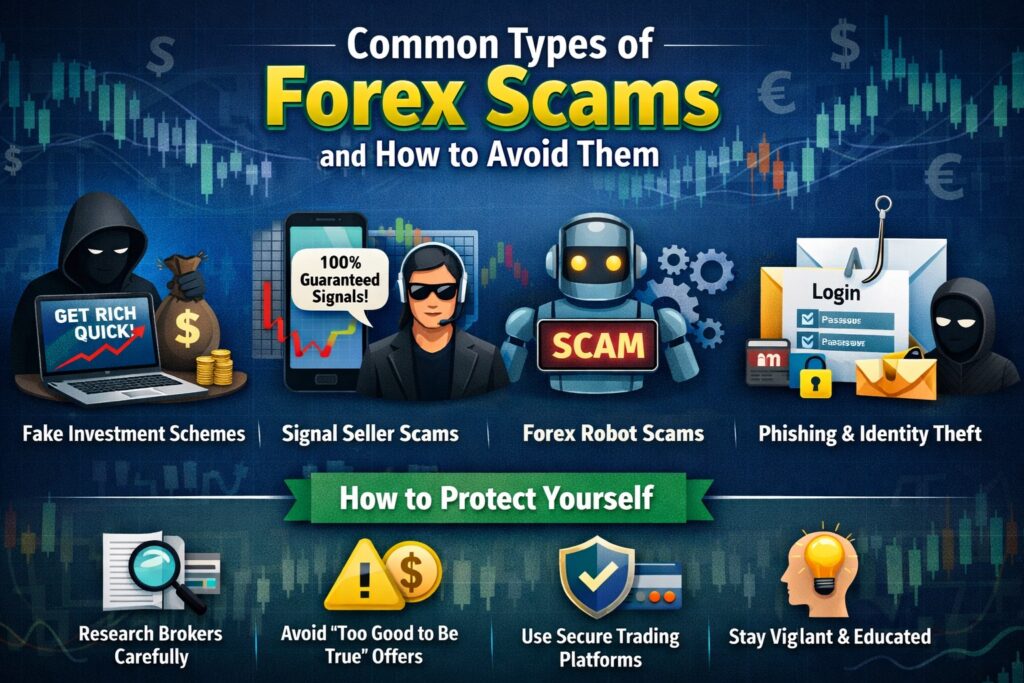
Understanding different scam types helps you recognize them before they cost you money. Let’s explore the most common schemes:
1. Unregulated Forex Brokers
One of the biggest red flags is dealing with unregulated forex brokers. Legitimate brokers must be licensed and regulated by recognized financial authorities such as:
- FCA (Financial Conduct Authority) in the UK
- ASIC (Australian Securities and Investments Commission) in Australia
- CySEC (Cyprus Securities and Exchange Commission) in Cyprus
- CFTC (Commodity Futures Trading Commission) in the USA
- NFA (National Futures Association) in the USA
How to spot a forex scam broker? Scammers often claim to be regulated but provide fake license numbers or list registrations with obscure, unrecognized authorities. Some offshore operations work from jurisdictions with minimal oversight, specifically to avoid accountability.
Protection tip: Before depositing any money, visit the regulator’s official website and verify the broker’s registration number. Don’t trust certificates or badges displayed on the broker’s website-these can be easily faked.
2. Forex Broker Refusing Withdrawal Scam
This is one of the worst types of fraud: you can deposit money easily, but when you try to withdraw it, the broker makes it difficult or blocks you. This forex broker refusing withdrawal scam takes several forms:
- Claims your account is “under verification” indefinitely
- Demands you meet impossible trading volume requirements
- Requires additional deposits before allowing withdrawals
- Adds unexpected fees that consume your entire balance
- Simply ignores withdrawal requests or goes silent
Warning sign: If a broker makes it easy to deposit but difficult to withdraw, you’re likely dealing with a scam. Legitimate brokers have straightforward withdrawal processes that typically complete within a few business days.
What to do if scammed by a forex broker? Document all communications, save transaction records, and report the fraud immediately. Services like truclaim.tech specialize in investigating forex investment scams and helping victims pursue recovery options.
3. High-Pressure Sales Tactics
Scammers frequently use aggressive sales techniques to rush you into depositing large amounts. They assign “account managers” or “senior traders” who:
- Call or message you constantly with “limited-time opportunities”
- Claim you’ll miss out on massive profits if you don’t act immediately
- Pressure you to increase your deposit to access “VIP” trading conditions
- Use manipulative language to create urgency and fear of missing out
Fraudsters exploit psychological triggers-greed, fear, urgency- to bypass your rational decision-making process.
Protection tip: Legitimate brokers never pressure clients into investing. Take your time to research, verify credentials, and make informed decisions. If someone is rushing you, that’s a major red flag.
4. Forex Signal Scams and Robot Scams
Forex signal scams involve selling trading signals, expert advisors, or automated trading robots that supposedly guarantee profits. These systems promise to do the trading for you while you earn money passively.
The reality: Most of these systems are worthless. They may use fake testimonials, manipulated backtesting results, and exaggerated profit claims. Once purchased, they either:
- Generate consistent losses
- Stop working after initial minor profits
- Come with hidden fees or required broker partnerships
- Turns out to be basic algorithms available for free elsewhere
Warning sign: Any system guaranteeing profits or claiming to eliminate risk is fraudulent. No legitimate strategy can remove risk from forex trading-volatility and uncertainty are inherent to currency markets.
Example: A “guaranteed 80% win rate” robot sold for $500 that actually loses money consistently, or a signal service charging monthly fees for alerts that are either too late or simply wrong.
5. Ponzi and Pyramid Schemes
Some scams operate as Ponzi and pyramid schemes disguised as forex trading operations or investment clubs. These schemes:
- Promise consistently high returns with minimal risk
- Pay early investors using deposits from newer investors
- Recruit heavily, sometimes through multi-level marketing structures
- Collapse when recruitment slows, and withdrawals exceed new deposits
Red flag: Any investment promising guaranteed monthly returns (like “10% per month”) regardless of market conditions is likely a Ponzi scheme. Real forex trading involves wins and losses-no one can guarantee consistent profits.
How these work? Initial investors may receive payments, creating the illusion of legitimacy. They then recruit others, perpetuating the cycle. Eventually, the scheme collapses, leaving most participants with total losses.
6. Fake Forex Trading Apps
With mobile trading’s popularity, fake trading apps have emerged as a significant threat. These malicious applications:
- Mimic legitimate trading platforms in appearance
- They are sometimes found in official app stores, adding false legitimacy
- Capture login credentials and banking information
- Display fake trading results to encourage larger deposits
- Transfer funds to scammers’ accounts instead of real markets
Protection: Only download trading apps directly from your broker’s official website, verify the developer’s identity, check recent reviews carefully, and confirm the app matches your broker’s official app.
7. Forex Account Manipulation
Forex account manipulation is a more subtle form of fraud where brokers with actual trading platforms manipulate prices, execution, or account balances to ensure clients lose money:
- Price manipulation: Showing different prices than the actual market rates
- Stop-loss hunting: Deliberately triggering stop-loss orders by manipulating spreads
- Requotes and slippage: Preventing profitable trades from executing while allowing losing trades
- Platform freezing: “Technical issues” that only occur during favorable market movements
Is my forex broker legit or a scam? Compare your broker’s prices with multiple sources, test execution speed on both winning and losing trades, and watch for patterns where the platform “glitches” at convenient times for the broker.
Top Signs of Forex Scams You Need to Know
Recognizing warning signs early can save you from financial disaster. Here are the red flags that indicate a scam:
Red Flags That Indicate a Forex Scam
1. Guaranteed Profits or Risk-Free Trading: No legitimate trader or broker can guarantee profits. The forex market is volatile and unpredictable. Anyone promising “guaranteed returns” or “zero-risk trading” is lying.
2. Unverifiable Regulation Claims: Fake trading platforms often make vague regulatory claims, use fake license numbers, or claim registration with obscure authorities you’ve never heard of.
3. Withdrawal Problems: Difficulty withdrawing funds is the clearest sign you’re being scammed. Legitimate brokers process withdrawals within 1-5 business days without excessive conditions.
4. Unrealistic Marketing Claims: Ads featuring luxury cars, mansions, and promises of “quit your job in 30 days” are hallmarks of scams. Real trading involves risk, discipline, and often years of learning.
5. Pressure to Deposit More Money: If your account manager constantly pushes you to deposit additional funds to “unlock” features, maintain positions, or access withdrawals, you’re being scammed.
6. No Negative Balance Protection: Legitimate regulated brokers in many jurisdictions offer negative balance protection, ensuring you can’t lose more than your deposit. Scam brokers may attempt to claim you owe them money beyond your initial investment.
7. Anonymous or Unresponsive Support: Fraudulent operations often have poor customer service, untraceable contact information, or support that disappears when you ask difficult questions about withdrawals or regulation.
8. Too-Good-To-Be-True Success Stories Fabricated testimonials, fake screenshots of massive profits, and claims of “ordinary people” making millions in weeks are standard tactics in forex fraud.
The Real Risks of Legitimate Forex Trading
Not every forex loss results from scams. Even with legitimate, regulated brokers, forex trading involves substantial risks:
1. Market Volatility
Currency prices can swing dramatically in response to economic data releases, geopolitical events, central bank decisions, and global crises. Even experienced traders can face unexpected losses during volatile periods.
Key point: Volatility is normal in forex trading. It’s not a scam-it’s the nature of currency markets.
2. Leverage Risks
Forex trading typically involves leverage, allowing you to control large positions with small deposits. While leverage can amplify profits, it equally amplifies losses. Many new traders underestimate how quickly excessive leverage can wipe out accounts.
Example: With 100:1 leverage, a 1% move against your position can wipe out your entire account.
3. Emotional and Psychological Challenges
Trading psychology is often harder than technical analysis. Fear and greed lead to:
- Overtrading (taking too many positions)
- Revenge trading (trying to recover losses immediately)
- Abandoning risk management rules
- Making impulsive decisions during market volatility
Tip: Even with a legitimate broker, poor emotional control can lead to significant losses that feel like being scammed but are actually self-inflicted.
How Can You Protect Yourself from Forex Scams?
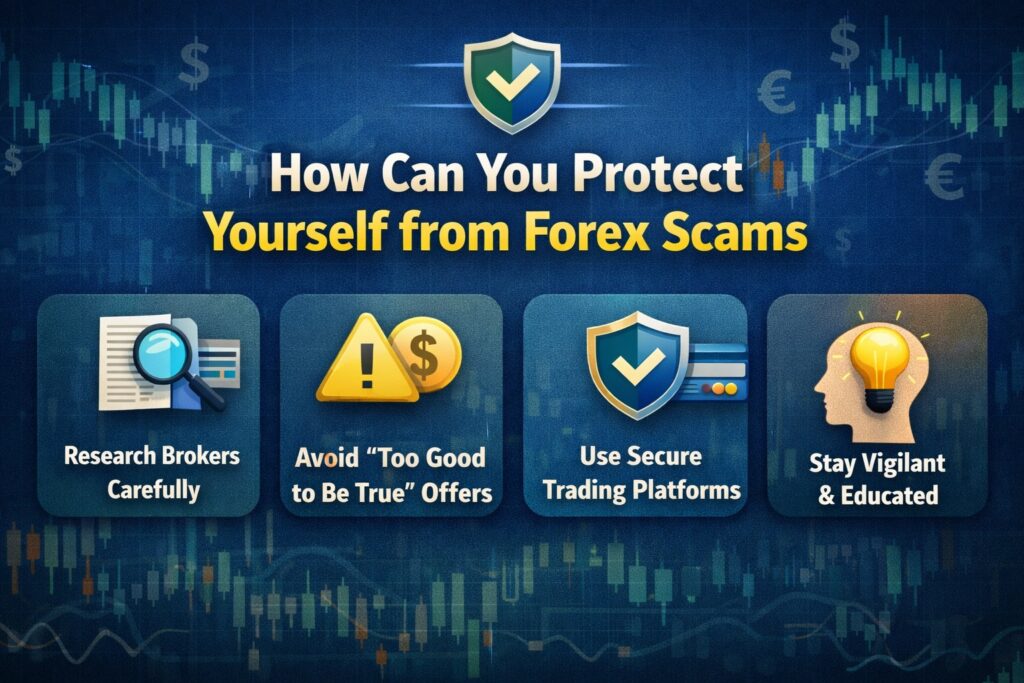
Implementing smart protection strategies safeguards your capital and ensures you’re trading in a safe environment:
Essential Tips for Avoiding Common Forex Scams
1. Verify Regulation Thoroughly: Always check your broker’s regulatory status through the regulator’s official website, not through links or information provided by the broker. Confirm:
- Registration/license number
- Company legal name
- Registered address
- Regulatory status (authorized, suspended, revoked)
2. Research Reviews and Complaints: Look for complaints on independent review sites, forums, and social media. Be wary of entirely positive reviews-they may be fake. Look for patterns in negative reviews, especially regarding withdrawal problems.
3. Test Withdrawal Process Early: After your initial deposit, make a small withdrawal request before trading seriously. This tests whether the broker actually processes withdrawals. Legitimate brokers make this simple; scammers will create obstacles immediately.
4. Start with Small Amounts: Never deposit large sums with a new broker. Start small, test the platform, evaluate execution quality, and verify withdrawals before increasing your capital.
5. Avoid Offshore and Unregulated Brokers: Offshore scam operations are common because these entities operate beyond the reach of major financial regulators. Stick with brokers regulated in reputable jurisdictions (UK, USA, Australia, EU, Japan).
6. Be Skeptical of Guarantees: In forex trading, there are no guarantees. Any promise of guaranteed profits, risk-free returns, or foolproof strategies is a scam. Legitimate trading involves accepting risk and managing it intelligently.
7. Educate Yourself Continuously: Understanding how to identify scams requires ongoing education about legitimate trading practices, market mechanics, and common fraud tactics. The more you know, the harder you are to fool.
8. Use Secure Payment Methods: Legitimate brokers accept bank transfers and regulated payment processors. Be extremely cautious if a broker only accepts cryptocurrency, wire transfers to personal accounts, or untraceable payment methods.
9. Read Terms and Conditions: Boring but critical: read the broker’s terms of service, especially sections about withdrawals, fees, and dispute resolution. Scammers often hide predatory clauses in fine print.
10. Trust Your Instincts: If something feels wrong, high-pressure sales, evasive answers, inconsistent information, walk away. Your intuition often recognizes red flags before you can articulate them logically.
Related Scams to Watch For
While focusing on forex fraud, be aware that scammers often operate across multiple fraud categories:
Cryptocurrency Investment Scams
Similar to forex investment scams, cryptocurrency scams promise high returns from crypto trading. These operations use the same tactics: fake platforms, withdrawal restrictions, and guaranteed profit claims.
Pig butchering crypto fraud is particularly insidious; scammers build long-term relationships (often romantic) before introducing fraudulent crypto investment opportunities.
Phishing Scams
Phishing scams target forex traders through fake broker emails, counterfeit login pages, and malicious links designed to steal credentials.
How to identify phishing scams?
- Check sender email addresses carefully for slight misspellings
- Hover over links before clicking to verify destinations
- Never enter login credentials from email links
- Verify urgent requests by contacting the broker directly
Phishing scam prevention: Enable two-factor authentication, use unique passwords for trading accounts, and bookmark your broker’s official website rather than searching for it each time.
Bitcoin Scams
Bitcoin scams often overlap with forex fraud, especially when scammers claim to offer “Bitcoin forex trading” or “cryptocurrency forex pairs.”
How to identify bitcoin scams?
- Promises of guaranteed Bitcoin profits
- Fake Bitcoin trading platforms
- Pyramid schemes disguised as Bitcoin investment clubs
- Phishing sites impersonating legitimate Bitcoin exchanges
Avoid bitcoin investment scams by applying the same verification steps used for forex brokers: check regulation, test withdrawals, and avoid guaranteed return promises.
Where to Report Forex Scams?
If you’ve been victimized, taking action helps you potentially recover funds and protects others from the same scammers. Here’s how to report fraud:
Steps to Report a Forex Scam
1. Report to Financial Regulators
- UK: Financial Conduct Authority (FCA)
- USA: Commodity Futures Trading Commission (CFTC) and National Futures Association (NFA)
- Australia: Australian Securities and Investments Commission (ASIC)
- EU: European Securities and Markets Authority (ESMA) or local regulators
2. File Complaints with Consumer Protection Agencies
- USA: Federal Trade Commission (FTC)
- UK: Action Fraud
- International: International Consumer Protection Enforcement Network (ICPEN)
3. Report Scammer Online Through Specialized Platforms: Services like truclaim.tech specialize in documenting fraud cases, investigating fraudulent brokers, and coordinating recovery efforts.
4. Contact Your Bank or Payment Processor: If you used a credit card, bank transfer, or payment service, contact them immediately. You may be able to reverse charges or freeze payments, especially if you act quickly.
5. Report Investment Scam to Law Enforcement: File reports with:
- Local police (for official documentation)
- FBI Internet Crime Complaint Center (IC3) in the USA
- Interpol for international fraud
6. Share Your Experience Publicly: Post complaints on review sites, forums, and social media to warn others. Include specific details (broker name, website, tactics used) to help others avoid the same trap.
Forex Scam Recovery: Can You Get Your Money Back?
The unfortunate truth is that recovering funds from scams is challenging but not always impossible. Here’s what you need to know about forex scam recovery:
Forex Scam Recovery Services
Professional recovery services can help by:
- Investigating the scam and tracing fund movements
- Coordinating with law enforcement and regulators
- Negotiating with banks and payment processors for chargebacks
- Pursuing legal action when viable
- Connecting you with fraud victim support resources
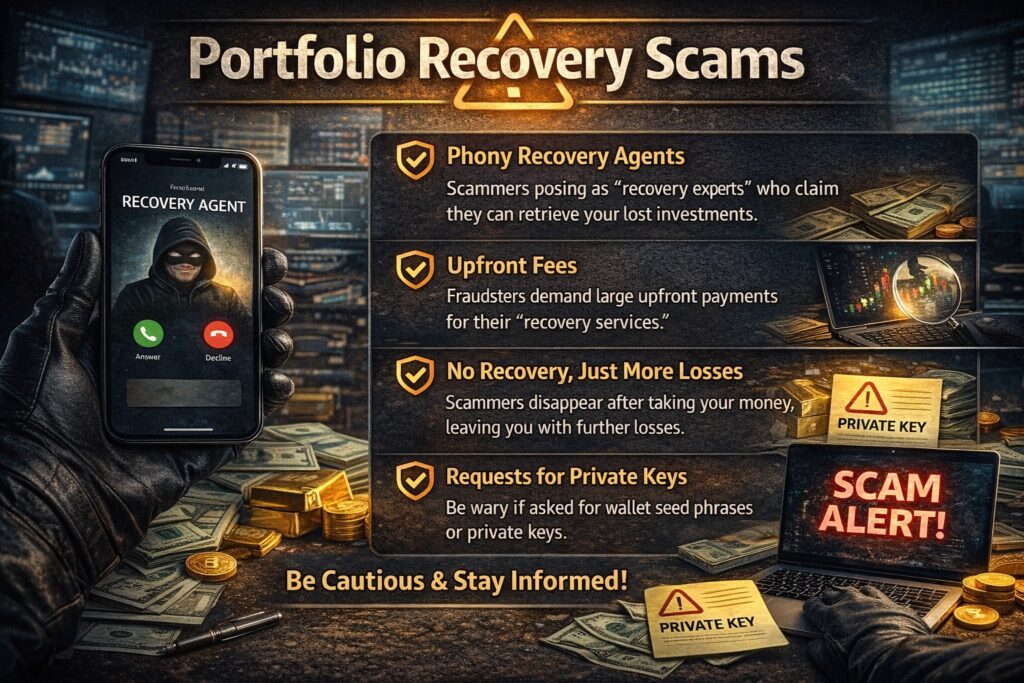
Important warning: Be cautious of “recovery scams” where fraudsters pose as recovery experts, charge upfront fees, and then disappear. Legitimate recovery services like truclaim.tech are transparent about their processes and don’t guarantee results or demand large upfront payments.
How to Recover Money from a Forex Scam?
Immediate Actions:
- Stop all contact with the scammer and don’t send additional money
- Document everything: save emails, chat logs, transaction records, screenshots, and account statements
- Contact your bank immediately to attempt payment reversals
- Report the scam to all relevant authorities
- Seek professional help from legitimate fraud investigation services
Get money back from crypto fraud or forex fraud: If payments were made via cryptocurrency, recovery becomes more complex, but specialized blockchain analysis firms can sometimes trace funds. Services like truclaim.tech employ blockchain tracking to follow crypto transactions and coordinate with exchanges to potentially freeze scammer accounts.
Fraud Victim Support
Being scammed is financially and emotionally devastating. Fraud victim support services provide:
- Counseling and psychological support
- Guidance through reporting and recovery processes
- Legal advice and connections to attorneys
- Community support from other victims
- Education to prevent future victimization
Report crypto scam online or report investment scam incidents even if you’re unsure about recovery prospects. Your report could help authorities identify patterns, connect cases, and potentially shut down scam operations before they victimize others.
Final Thoughts: Stay Alert, Trade Smart
Forex trading scams are complex, constantly changing, and target both new and experienced traders. Understanding warning signs and implementing smart protection strategies are your best defenses.
Remember these key takeaways:
- Always verify regulations through official regulator websites
- Never trust guaranteed profit promises-they’re always scams
- Test withdrawals early with small amounts
- Research extensively before depositing funds
- Watch for pressure tactics-legitimate brokers don’t rush you
- Start small and only increase deposits after thorough verification
- Trust your instincts-if something feels wrong, it probably is
If you’ve already fallen victim to forex broker scams, don’t suffer in silence. Acting quickly increases your chances of recovery. Truclaim.tech specializes in investigating fraud, tracking stolen funds, coordinating with authorities, and pursuing every available recovery option. Our team understands how fraudsters operate and uses that knowledge to help victims fight back.
Don’t wait-if you’ve been scammed, visit truclaim.tech today to report your case and explore your recovery options. Every day matters when pursuing fraud recovery.
The forex market offers legitimate opportunities for those willing to learn, practice discipline, and trade with regulated brokers. By staying informed about warning signs and maintaining healthy skepticism toward too-good-to-be-true promises, you can participate in forex trading while keeping your capital safe from fraudsters.
Stay safe, trade smart, and always prioritize security over promises of quick riches.
For more updates, follow us on: