Losing access to your crypto doesn’t have to be a disaster. For many people, crypto asset recovery is as simple as resetting a password for any other online account. The entire process hinges on the answer to one crucial question: where is your crypto actually held?
If you use a major platform like Coinbase, you’re using what’s called a “custodial” service. Think of them as a bank for your digital assets. Just as a bank holds your money and can help if you lose your debit card, these exchanges hold your crypto for you. This is exactly why, if you forgot your crypto wallet password for their platform, they have a system in place to help you regain access as part of standard crypto recovery strategies.
So, if you’ve lost access to a Coinbase account or a similar exchange, don’t panic. The crypto wallet recovery process is almost certainly one you already know:
- Use the ‘Forgot Password’ link on the login page.
- Verify your identity via your registered email or phone.
- Set a new, strong password.
Once you’re back in, there’s one critical action you must take: enable Two-Factor Authentication (2FA). Industry data consistently shows this simple step blocks the vast majority of unauthorized login attempts. If you ever suspect a breach, immediately use the exchange’s account-lock feature and contact support. This is your first line of defense when trying to recover lost cryptocurrency from a compromised exchange account.
The Crucial Difference: Your Bank vs. Your Own Digital Vault
While resetting your password on an exchange feels familiar, that process only works because the company is acting as a guardian, or custodian, of your assets. This is just one of two major crypto wallet types, and understanding the difference is essential for keeping your funds safe. The method you use for crypto recovery depends entirely on where you choose to store it.
Think of a platform like Coinbase or PayPal as a crypto bank. Because they hold your digital currency for you, they are known as custodial services. You trust them to secure your funds, and in return, they offer customer support and password resets. It’s convenient, but it means you are ultimately trusting a third party with your money, just like a traditional bank.
The alternative is what’s known as a self-custody wallet. This type of wallet, often an app on your phone or computer, is more like a personal digital vault than a bank account. You, and only you, have the keys and total control. This freedom comes with a critical trade-off: you also have total responsibility. There is no customer service number to call if you lose access.
This distinction between a “crypto bank” and your own “digital vault” is the most important concept in crypto security. Recovering access to a custodial account involves proving your identity to a company. But to regain access to a self-custody wallet, you don’t need to prove who you are—you simply need the one and only master key.
What Is a Seed Phrase and Why Is It Your ‘Master Key’?
When you first set up a self-custody wallet, whether it’s an app or a hardware device like a Ledger, it generates a unique list of 12 or 24 simple words. This list is your seed phrase, also called a recovery phrase. Think of it less like a password you type daily and more like the one-time-use secret code to a bank vault that only you possess.
This phrase is for recovery, not for regular access. Imagine your phone is lost or your computer crashes. Your crypto isn’t gone; it’s just inaccessible. To get it back, you simply install the wallet on a new device and enter your seed phrase. This single action restores your wallet, instantly recreating your entire digital vault and all of its contents. It’s your safety net for any and all hardware failures.
This incredible power comes with a serious warning: anyone who gets a copy of your seed phrase has complete and total control of your funds. They don’t need your password, your fingerprint, or your device. With just those words, they can restore your wallet on their own device and drain it completely. There are no take-backs or second chances. The phrase is your crypto.
Because this phrase is effectively the ultimate tool for private key recovery, protecting it is the single most important job you have when managing your own crypto. It’s more valuable than your wallet’s password and more sensitive than your bank account details. This raises the most important question of all: how do you keep this master key safe from thieves, accidents, and even your own forgetfulness?
The Only Safe Way to Store Your Crypto ‘Master Key’
Securing your seed phrase follows one simple, non-negotiable rule: keep it completely offline. Storing your phrase on any device connected to the internet—as a photo, in a notes app, or in a cloud drive—is the most common and devastating mistake a crypto owner can make. A digital file can be found by hackers, viruses, or malware. It’s the digital equivalent of leaving a copy of your house key taped to the front door.
To protect your “master key” properly, the solution is physical, not digital. Follow these simple dos and don’ts:
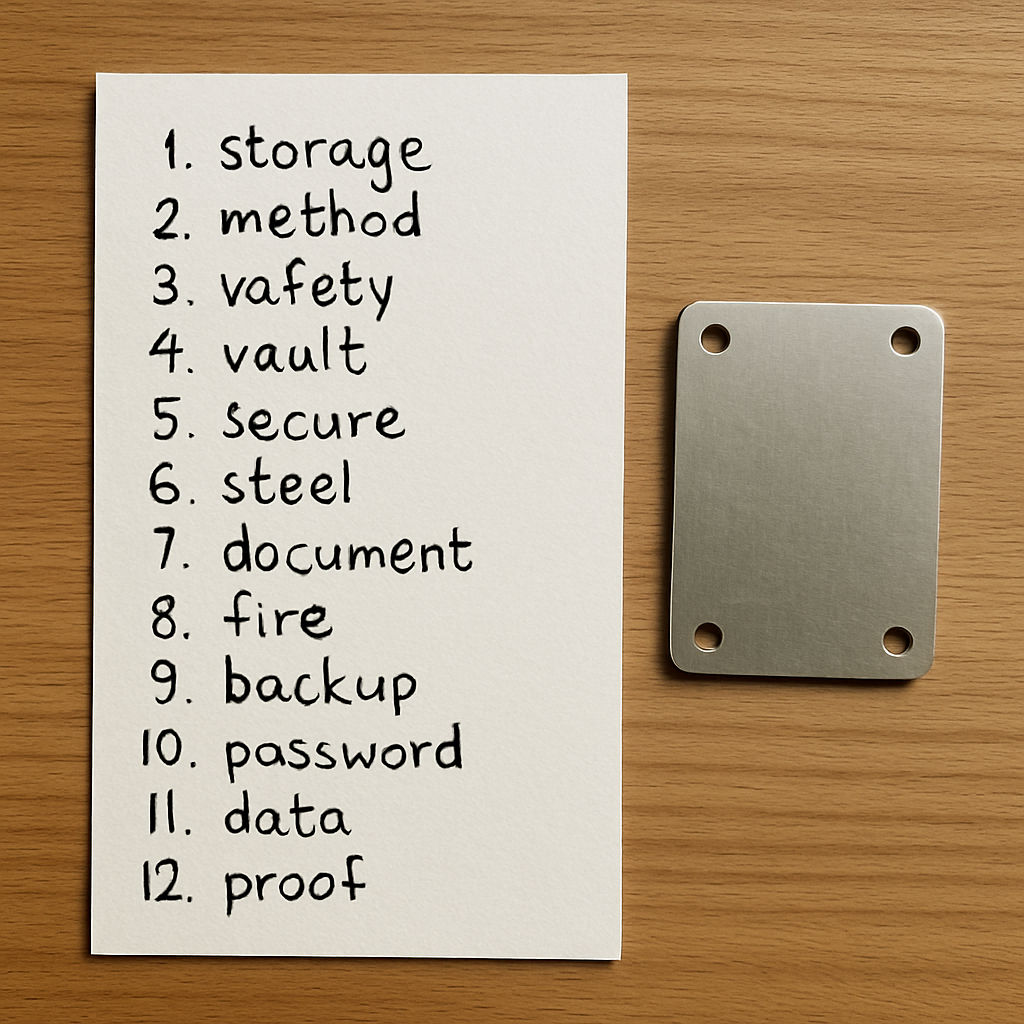
- DO: Write your 12 or 24 words down on paper or a dedicated card. Store it in a secure, hidden location like a fireproof safe. Consider making a second physical copy to keep in another safe place.
- DON’T: Never take a screenshot, save it in a text file, email it to yourself, or upload it to any cloud service like Google Drive or iCloud.
For ultimate peace of mind, many users engrave their seed phrase onto steel or titanium plates. This extra step ensures your recovery method survives fire, water, and physical damage, strengthening long-term digital asset recovery planning.
How to Restore Your Wallet on a New Device Using Your Seed Phrase
Imagine your phone is lost, stolen, or simply broken. While frustrating, this is not a crypto catastrophe—it’s just an inconvenience, because you have your offline seed phrase ready. This “master key” allows you to regain full access to your funds on any new device, and the process is much simpler than you might think. This is exactly how you restore a wallet with a seed phrase, whether it’s on a new phone or a hardware device like a Ledger.
First, you’ll need a new phone or computer. On that device, you simply download a fresh copy of the same wallet application you were using before (or any other compatible wallet). When you open the app for the first time, it will present you with two main choices: “Create a New Wallet” or an option like “Import Wallet,” “Restore from Backup,” or “I already have a seed phrase.” You must choose to import or restore.
Selecting this option will bring you to a screen asking you to type in your 12 or 24 secret words, in the correct order. This is the moment you’ll retrieve your carefully stored physical copy. As you enter the phrase, the wallet software uses it as a blueprint to mathematically regenerate access to your specific funds on the blockchain. It’s like using a master key to unlock a brand-new, identical vault.
Once you’ve entered the phrase correctly, your crypto balance will appear in the new wallet, exactly as you left it. This process proves that the wallet app itself doesn’t hold your money; it’s just a secure window for viewing and managing it. As long as you have your seed phrase, you have your crypto. But this raises a darker question: what happens if a thief gets ahold of it?
The Hard Truth: Can Stolen Crypto Be Recovered?
While you can restore your own wallet on a new device, getting back crypto that has been sent to a thief or a wrong address is a different story entirely. In the traditional banking world, you can often call your bank to reverse a fraudulent charge. With cryptocurrency, there is no central authority to call. Once a transaction is confirmed on the blockchain—that unchangeable public ledger—it’s permanent. Think of it like handing someone cash; you can’t just cancel the payment after it has left your hand.
This leads to a common question: can stolen cryptocurrency be traced? The answer is yes. Because the blockchain is public, experts can often perform blockchain transaction tracing to follow the digital trail of stolen funds from one wallet to another. However, and this is the crucial part, seeing where the crypto went is not the same as getting it back. It’s like watching a thief’s escape on a security camera—you have a record of the event, but you can’t reach through the screen and take back what’s yours.
Whether you accidentally sent Bitcoin to the wrong address or were the victim of a hack, the outcome is usually the same: the funds are likely gone for good. You can, and should, report crypto theft to the police, as it helps them build larger cases against criminal networks. But for an individual user, the chances of law enforcement recovering your specific assets are unfortunately very low.
The difficult reality is that in the world of self-custody crypto, security is entirely your responsibility. Prevention is not just the best defense; it’s often the only one. This feeling of loss and desperation, however, is exactly what a new type of criminal preys on—the recovery scammer who promises to get your money back for a fee.
Warning: How to Spot and Avoid Crypto Recovery Scams
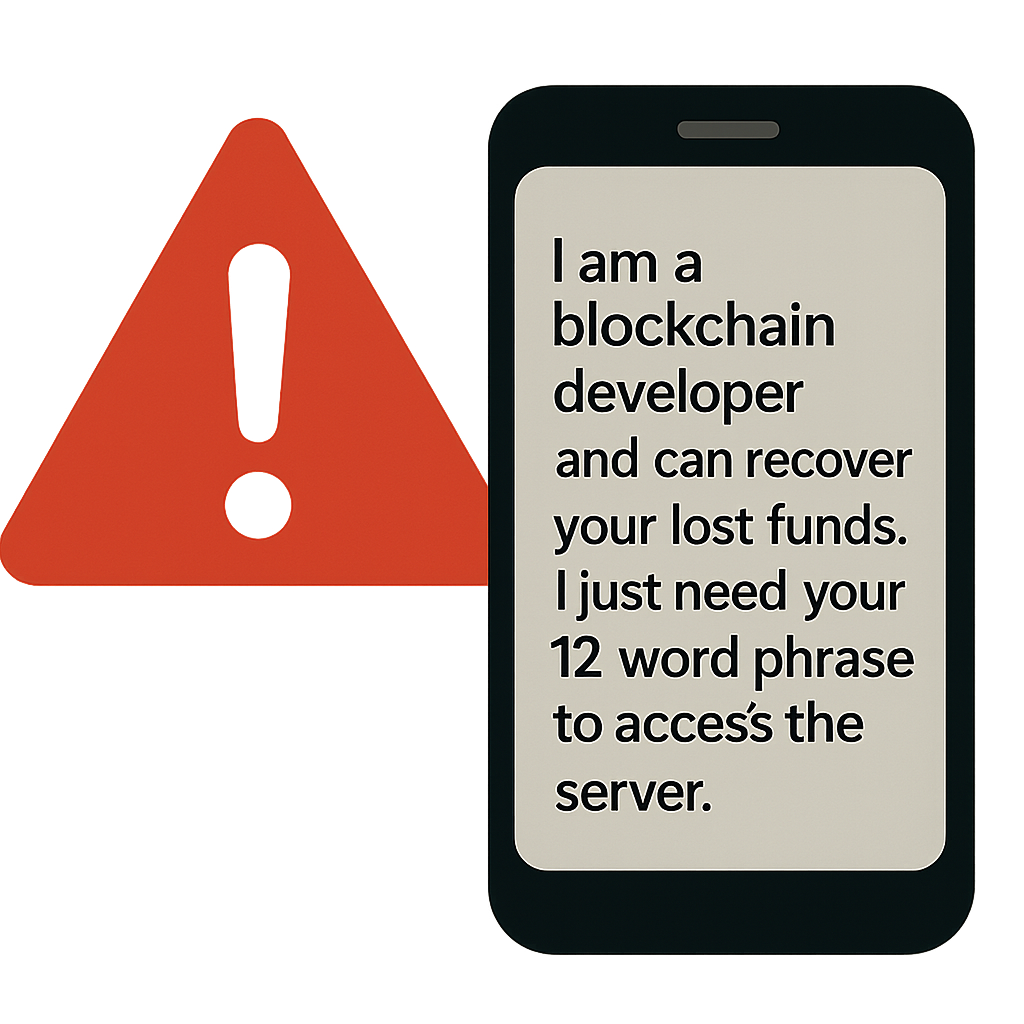
In the desperate search for a solution after a loss, you might encounter people online claiming to be a “cryptocurrency forensics expert” or a “blockchain recovery specialist.” These offers often appear in social media comments or direct messages, preying on your hope. While legitimate professionals do exist for large-scale law enforcement cases, the vast majority of unsolicited offers are wallet recovery service scams.
Recognizing these cons is straightforward once you know what to look for. Be on high alert if an alleged helper:
- Contacts you first. Legitimate services don’t cold-message victims online.
- Guarantees a recovery. No one can guarantee the return of stolen crypto.
- Asks for an upfront fee. Scammers will often demand payment for their “service,” then disappear.
- Asks for your seed phrase or password. This is the ultimate red flag.
That last point is the most important rule in all of crypto: Never, ever share your seed phrase or private keys with anyone. A person asking for this information is like a locksmith asking for the master key to your house so they can “check if it’s safe.” It’s always a trick. This also applies to any so-called private key recovery tools you find online; these are almost always malware designed to steal your information.
The threat of these scams underscores a simple truth: the ultimate power lies in prevention. Instead of searching for a cure after the fact, the best strategy is making your crypto secure from day one.
Your 5-Minute Crypto Security Action Plan
Crypto security might seem complex, but the most important principle of recovery is simple: it all depends on whether you’re using a digital “bank” (an exchange) or your own digital “vault” (a self-custody wallet). This knowledge alone puts you in control.
You can turn this knowledge into a real crypto security plan in the next five minutes.
Your Security Checklist:
- Identify: Are you using an exchange (like Coinbase) or a self-custody wallet (like MetaMask)?
- Exchange User: Turn on Two-Factor Authentication (2FA) in your security settings right now.
- Self-Custody User: Find your seed phrase. Confirm it is stored safely offline, not as a photo or a file.
- Lost Phrase? If you can’t find your phrase but still have access to your wallet, immediately create a new wallet, write down the new phrase, and move your crypto to it.
With your assets secure, take one final step. Thinking about what happens to crypto when you die is a crucial part of ownership. Just as you’d list a bank account in a will, your plan should include instructions for your loved ones on how to find your securely stored access information.
By taking these steps, you become the true guardian of your digital assets. This knowledge is the foundation of real ownership and peace of mind in the crypto world.
Protect Your Crypto with TruClaim.tech
If you’ve lost access to your crypto, faced suspicious activity, or believe you may have been targeted by a crypto-related scam, TruClaim.tech is here to help. TruClaim.tech is a trusted platform dedicated to crypto awareness, scam reporting, and recovery education. Whether you’re researching safe crypto recovery strategies, verifying suspicious platforms, or learning how to protect your digital assets, TruClaim.tech provides clear, unbiased insights to help you make informed decisions. Don’t let confusion or panic lead to costly mistakes—visit TruClaim.tech to stay informed, report crypto fraud, and take confident steps toward securing your cryptocurrency and digital assets.
Contact us today for a free consultation and begin your journey to recover lost forex or crypto funds. Visit the TRU CLAIM official website to get professional help now.
Check the list of the latest scam brokers here.
For more updates, follow us on:
Comments are closed