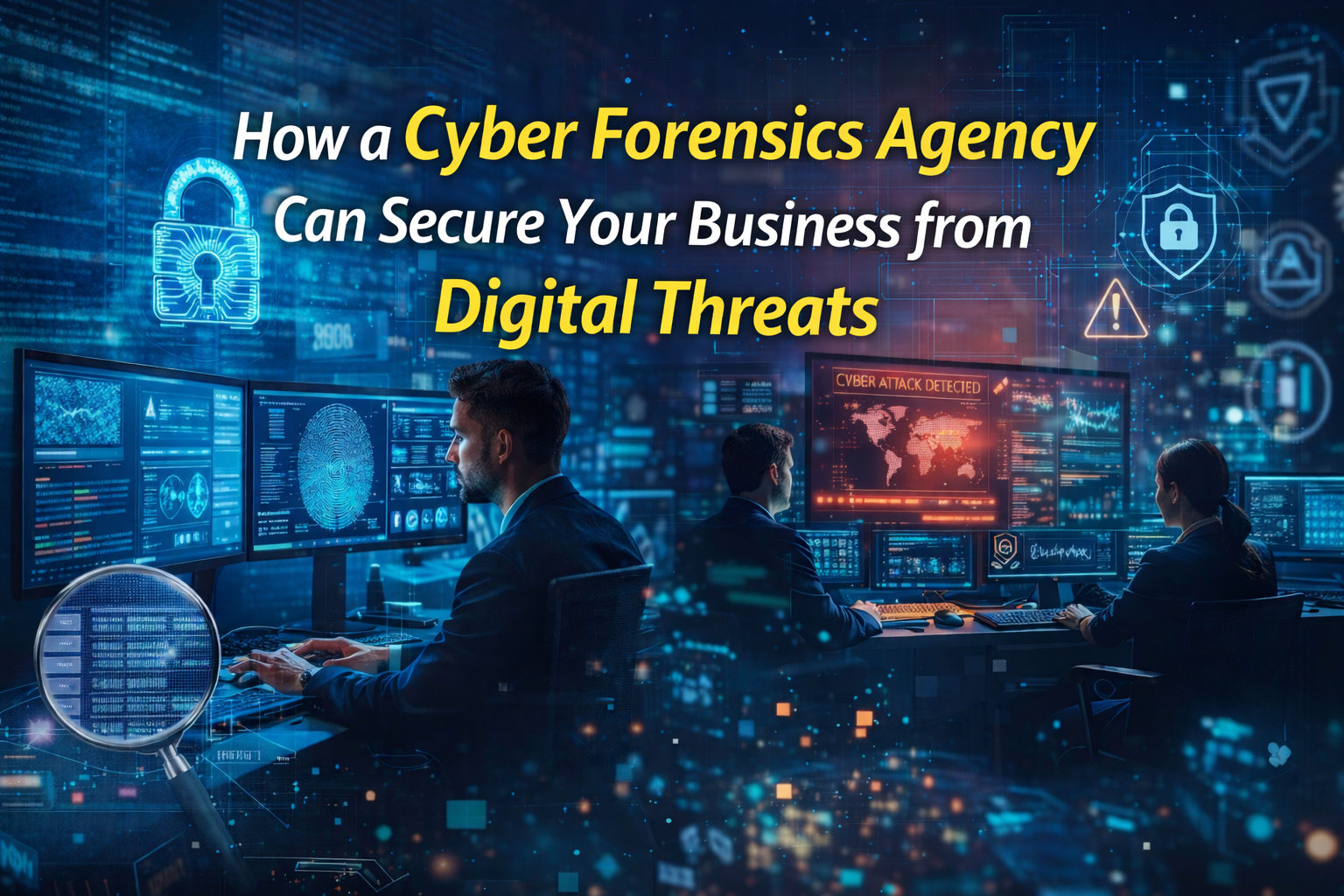
In an era where cyber threats are growing in both frequency and sophistication, businesses of all sizes face unprecedented risks. A cyber forensics agency serves as a critical line of defense, combining technical expertise with investigative precision to identify, analyze, and respond to digital incidents. Whether you are dealing with a data breach, insider threat, or ransomware attack, understanding the capabilities of a cyber forensics partner can be the difference between rapid recovery and lasting damage.
This article explores the core services and disciplines that define a modern cyber forensics agency, and explains how each one contributes to a stronger, more resilient business security posture.
Understanding Cyber Threat Intelligence
What is Cyber Threat Intelligence?
Cyber threat intelligence (CTI) is the practice of collecting, analyzing, and applying information about existing and emerging threats to an organization’s digital environment. It goes beyond simple antivirus alerts or firewall logs — CTI transforms raw data into actionable insights that security teams can use to anticipate and neutralize attacks before they cause harm.
There are three primary tiers of cyber threat intelligence:
- Strategic Intelligence — High-level insights for executive decision-making, covering threat trends and geopolitical risks.
- Tactical Intelligence — Information about attack techniques, tools, and procedures used by threat actors.
- Operational Intelligence — Real-time data about active threats targeting specific industries or organizations.
A professional cyber forensics agency leverages all three levels to provide a comprehensive picture of the threat landscape surrounding your business.
Importance of Cyber Threat Intelligence for Businesses
Without cyber threat intelligence, businesses operate reactively — responding to breaches after they have already occurred. With CTI, organizations gain a proactive security posture. Here is why that matters:
- Early Warning: Identify threat actors and attack campaigns before they reach your systems.
- Informed Decision-Making: Security investments and policy decisions are grounded in real-world threat data.
- Reduced Dwell Time: Faster detection means attackers spend less time inside your network, limiting the damage they can do.
- Regulatory Compliance: Many industries require documented evidence of threat monitoring and risk management, which CTI programs support.
Partnering with a cyber forensics agency for threat intelligence means your organization benefits from dedicated analysts who monitor dark web forums, threat actor communications, and vulnerability disclosures around the clock.
Digital Forensics Services Overview
Types of Digital Forensics Services
Digital forensics services encompass a wide range of investigative disciplines, each tailored to a specific type of digital evidence or incident scenario. A full-service cyber forensics agency typically offers:
- Computer Forensics: Examination of hard drives, operating systems, and file systems to recover deleted files, document user activity, and identify unauthorized access.
- Network Forensics: Analysis of network traffic logs and packet captures to trace the origin and path of a cyberattack.
- Cloud Forensics: Investigation of cloud environments, including SaaS platforms and storage services, where traditional forensic tools may not apply.
- Email Forensics: Tracing the source and content of phishing emails, business email compromise (BEC) scams, and internal communications.
- Database Forensics: Identifying unauthorized queries, data exfiltration attempts, and tampering within enterprise databases.
Each discipline requires specialized tools and expertise, which is why businesses rely on dedicated forensics professionals rather than attempting in-house investigations.
How Digital Forensics Aids in Security?
Digital forensics does not just help after an incident — it also plays a vital role in strengthening ongoing security operations. By examining past incidents in detail, forensic investigators can:
- Identify root causes and close the vulnerabilities that allowed an attack to succeed.
- Build a documented evidence trail for legal proceedings or regulatory investigations.
- Inform security awareness training by revealing how social engineering or phishing attacks succeeded.
- Support cyber insurance claims with detailed, court-admissible forensic reports.
The intelligence gathered through digital forensics services feeds directly into an organization’s broader security strategy, creating a feedback loop that continuously improves defenses.
The Role of an Incident Response Team
What Does an Incident Response Team Do?
An incident response team (IRT) is a specialized group of cybersecurity professionals responsible for managing the lifecycle of a security incident — from detection through containment, eradication, and recovery. When a breach or attack occurs, time is the most critical variable. An experienced incident response team follows a structured methodology:
- Preparation: Developing response plans, communication protocols, and toolsets before an incident occurs.
- Identification: Detecting and confirming that a security incident is underway.
- Containment: Isolating affected systems to prevent the threat from spreading.
- Eradication: Removing malware, backdoors, or unauthorized accounts from the environment.
- Recovery: Restoring systems to normal operation and verifying that the threat has been fully eliminated.
- Post-Incident Analysis: Documenting findings and implementing improvements to prevent recurrence.
A cyber forensics agency with an embedded incident response team provides end-to-end management of this process, ensuring nothing is overlooked in the chaos of an active attack.
Benefits of Having an Incident Response Team
Organizations that invest in a dedicated or retained incident response team experience measurably better outcomes when breaches occur. The key benefits include:
- Faster Containment: Reducing the window in which attackers can operate, limiting data loss and system damage.
- Lower Financial Impact: Studies consistently show that organizations with incident response plans in place suffer significantly lower average breach costs.
- Regulatory Readiness: Many compliance frameworks, including HIPAA, PCI-DSS, and GDPR, require documented incident response procedures.
- Stakeholder Confidence: Demonstrating that your organization can respond decisively to cyber incidents builds trust with customers, partners, and investors.
Whether your incident response team is internal or provided by a cyber forensics agency on retainer, having this capability ready before an attack strikes is one of the most valuable security investments a business can make.
Mobile Device Forensics in Today’s Business Environment
Importance of Mobile Device Forensics
The modern workplace runs on mobile devices. Employees access corporate email, cloud applications, and sensitive data from smartphones and tablets every day. This creates a significant and often underestimated attack surface. Mobile device forensics is the discipline of extracting and analyzing digital evidence from phones, tablets, and wearables.
For businesses, mobile device forensics is essential in several scenarios:
- Employee misconduct investigations involving company-issued devices.
- Data theft cases where sensitive files may have been copied to a personal phone.
- Verification of device compromise in cases of spyware, stalkerware, or malicious apps.
- Legal discovery requiring communication records from mobile platforms.
A cyber forensics agency with dedicated mobile forensics capabilities can extract data even from locked or damaged devices, using court-admissible methods that preserve the integrity of the evidence.
Challenges in Mobile Device Forensics
Mobile forensics is technically demanding, and the rapid evolution of mobile operating systems creates constant challenges for investigators:
- Encryption: Modern smartphones encrypt data at rest by default, requiring specialized tools and techniques to access content legally.
- Operating System Diversity: The differences between iOS and Android — and the many versions of each — mean forensic approaches must be constantly updated.
- Cloud Synchronization: Much of a device’s data may reside in cloud services rather than on the device itself, requiring separate legal processes to access.
- Anti-Forensic Measures: Some users or attackers deliberately configure devices to wipe data remotely or resist forensic examination.
An experienced cyber forensics agency stays current with the latest mobile forensic methodologies, ensuring that critical evidence is not lost to technical barriers.
Forensic Data Recovery: Ensuring Business Continuity
What is Forensic Data Recovery?
Forensic data recovery is the process of retrieving lost, deleted, corrupted, or encrypted data from digital storage media using specialized techniques that preserve the legal and evidentiary integrity of the recovered information. Unlike standard IT data recovery, forensic data recovery is conducted in a manner that ensures the process itself cannot be challenged in legal proceedings.
Common scenarios where forensic data recovery is required include:
- Ransomware attacks that have encrypted critical business files.
- Accidental or deliberate deletion of important records.
- Hardware failures affecting servers, workstations, or backup systems.
- Corruption of databases or file systems due to malware or software errors.
A cyber forensics agency performing data recovery works from forensic images of affected media, leaving the original evidence untouched while conducting the analysis.
Steps in the Forensic Data Recovery Process
The forensic data recovery process follows a rigorous, documented sequence to ensure accuracy and admissibility:
- Evidence Preservation: Creating a bit-for-bit forensic image of the affected storage media before any recovery attempts begin.
- Assessment: Analyzing the nature and extent of the data loss to determine the most appropriate recovery strategy.
- Recovery Execution: Applying forensic tools and techniques to extract recoverable data from the forensic image.
- Verification: Confirming the integrity and completeness of recovered data through hash verification and validation.
- Documentation: Producing a detailed chain-of-custody report that records every action taken, making findings defensible in court.
- Delivery and Remediation: Providing recovered data to the business along with recommendations to prevent future data loss incidents.
When conducted by a qualified cyber forensics agency, this process not only restores access to critical information but also produces evidence that can support insurance claims, regulatory investigations, or litigation.
Conclusion: Enhancing Business Security through Cyber Forensics
The digital threat landscape is not slowing down. Cybercriminals continue to develop more sophisticated attack methods, targeting businesses of every size and industry. A cyber forensics agency provides the expertise, tools, and methodology to meet these threats head-on — not just by responding to incidents, but by building a deeper understanding of risks before they materialize.
From cyber threat intelligence that keeps your team ahead of emerging attacks, to incident response capabilities that minimize damage when breaches occur, to specialized disciplines like mobile device forensics and forensic data recovery, a full-service cyber forensics partner delivers a comprehensive security advantage.
Investing in a relationship with a trusted cyber forensics agency is not simply a reactive measure — it is a strategic commitment to safeguarding your business, your data, and your customers. In today’s threat environment, that commitment is not optional. It is essential.
Protect Your Business from Cyber Threats with Us
If your business has experienced a data breach, ransomware attack, suspicious network activity, or believes a cybercriminal may have targeted it, TruClaim.tech is here to help. It is a trusted platform dedicated to cyber threat awareness, incident reporting, and digital security education. Whether you’re researching safe cyber recovery strategies, verifying suspicious activity, or learning how to protect your business data and systems, TruClaim.tech provides clear, unbiased insights to help you make informed decisions. Don’t let confusion or panic lead to costly mistakes — visit TruClaim.tech to stay informed, report cyber threats, and take confident steps toward securing your business and digital assets.
Contact us today for a free consultation and begin your journey to recover from cyber threats and digital fraud.
Check the list of the latest scam brokers here.
Comments are closed