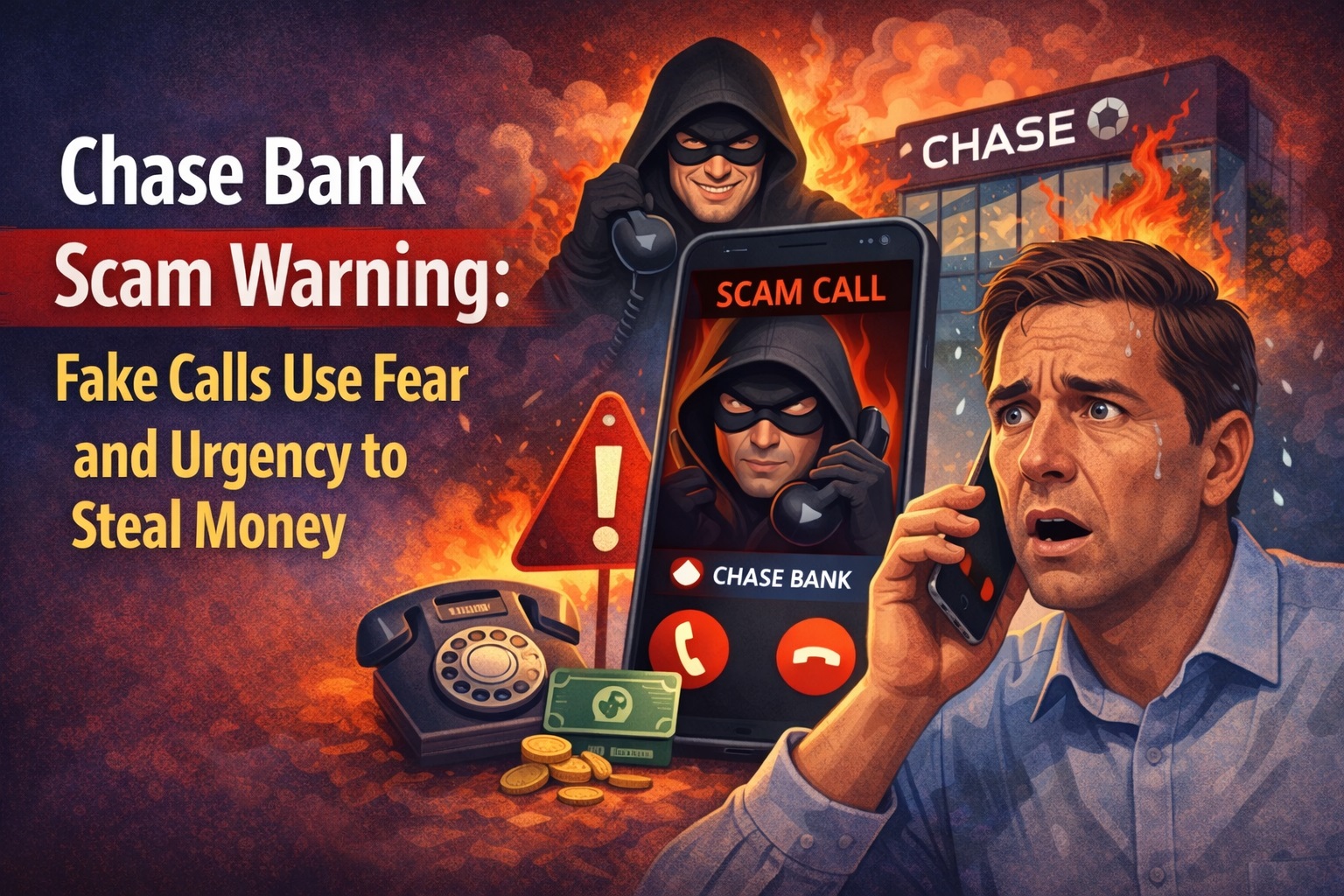
A new Chase Bank phone scam is spreading, where scammers spoof Chase’s phone number and claim large fraudulent charges. Victims are pressured to act fast and are later asked to send money through Zelle or similar apps. Chase does not handle fraud this way. Hanging up and calling the bank directly is the safest action.
Fake Chase Calls Are Targeting Customers Again
A new wave of phone scams is targeting Chase Bank customers across the U.S., according to recent reports shared on Reddit and other online forums. These scam calls appear to come directly from Chase Bank, using real-looking phone numbers and professional language to trick people into believing the call is legitimate.
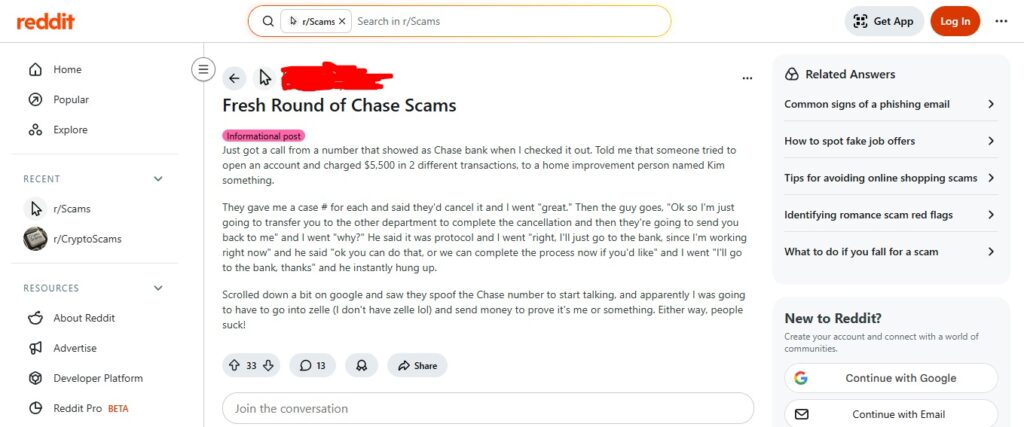
In one recent case, a victim received a call that showed up as “Chase Bank” on their phone. The caller claimed someone had tried to open a new Chase account and made two unauthorized charges totaling $5,500 to a home improvement contractor.
The caller sounded calm and helpful, which made the situation feel real.
How the Scam Call Unfolds
A Fake Fraud Story
The caller explained that the charges were already being “cancelled” and provided fake case numbers to sound official. They then said the victim needed to be transferred to another department to complete the process.
When the victim questioned the process and said they would go to a Chase branch instead, the caller immediately hung up.
Experts say this behavior is a clear sign of a scam.
Why the Call Looks Real
Caller ID Spoofing
Scammers use a technique called caller ID spoofing, which allows them to display Chase’s real phone number on your screen. This makes it look like the call is coming directly from the bank, even though it is not.
Just because your phone says “Chase Bank” does not mean the call is genuine.
How Real Banks Handle Fraud
Legitimate banks like Chase Bank:
- Do not ask customers to fix fraud during unexpected calls
- Do not ask customers to send money to “secure” accounts
- Encourage visiting a branch or calling official numbers
- Do not rush or pressure customers
If a caller hangs up when you say you will visit the bank, it is almost certainly a scam.
What the Scammer Really Wants
Why Zelle Is Mentioned
Many victims report that scammers eventually ask them to:
- Send money using Zelle or instant payment apps
- “Verify” their identity by moving funds
- Believe the transfer will be reversed later
Once money is sent through these apps, it is usually impossible to recover. That is why scammers push urgency and discourage victims from contacting real bank employees.
Common Warning Signs
You may be dealing with a Chase scam if you notice:
- Unsolicited calls about large fraud charges
- Pressure to act immediately
- Requests to send money
- Fake case numbers
- Calls end suddenly when questioned
If something feels off, trust your instincts.
What You Should Do Right Away
- Hang up the call
- Do not share account details, PINs, or codes
- Never send money
- Call Chase using the number on your bank card
- Report the call to your bank
Need Help After a Scam? Tru Claim Can Assist
If you’ve already sent money or shared information, don’t panic. TRU CLAIM helps scam victims understand what steps to take next, how to document their case, and how to explore recovery options.
Visit TruClaim.tech to get support, report your situation, and learn how to protect yourself going forward.
Contact us today for a free consultation and begin your journey to recover lost forex or crypto funds. Visit the TRU CLAIM official website to get professional help now.
Check the list of the latest scam brokers here.
FAQ:
Q1. Does Chase really call customers about fraud?
Yes, but they will never ask you to send money or stay on an unexpected call.
Q2. Why do scammers use urgency?
Fear makes people act without verifying information.
Q3. Is Zelle ever used to fix fraud?
No. Banks do not use Zelle for fraud reversals.
Q4. What if I already sent money?
Contact your bank immediately and seek help from TruClaim.tech.
If a call claims to be from Chase and pressures you to act fast or move money, it’s a scam. Hang up, verify on your own, and never let fear make financial decisions for you.
For more updates, follow us on: